
In the modern enterprise real estate landscape, C-suite executives, portfolio managers, and investor relations leaders face a paradoxical challenge. Property management systems such as Yardi Voyager, MRI Software, RealPage, and Procore house unprecedented volumes of operational, leasing, and financial data. Organizations have spent millions building central data warehouses and configuring Power BI dashboards to track every operational nuance.
Yet, despite this abundance of data, executive decision-making and investor alignment are frequently hampered by communication friction. Operating in an environment where quarterly investor updates, monthly owner packs, tenant compliance alerts, and capital expenditure approvals are manually assembled, attached to static emails, or hidden behind portal logins creates significant bottlenecks.
Forward-thinking real estate organizations are recognizing that a dashboard is not a delivery mechanism. The true challenge in enterprise property management is no longer data visualization; it is automated, event-driven signal delivery. C-suite leaders are increasingly demanding intelligent operational engines capable of pushing actionable insights, automated owner reports, and real-time risk notifications directly to stakeholders across their preferred communication channels.1. Why Is Traditional Real Estate Report Distribution Failing the C-Suite?
For decades, the standard protocol for real estate reporting followed a predictable, manual cycle that inherently creates delivery friction and operational risk:
A. The "Spam Folder & Attachment" Trap:
Manual email distribution reliance creates significant deliverability risks. Large PDF attachments, unverified sending domains, and bulk distribution lists routinely trigger enterprise spam filters. When an investor or property owner fails to receive a monthly financial statement, the resulting friction strains business relationships and creates redundant work.
B. Portal Fatigue and Low Engagement:
The industry's default response to email deliverability issues has been forcing stakeholders onto client portals. While portals are essential for static document archives, relying on them for time-sensitive notifications creates friction. Expecting stakeholders to proactively log into separate portals leads to low engagement and delayed approvals.
C. Static Data vs. Dynamic Operational Signals:
A standard 50-page monthly owner report provides historical context, but it rarely highlights immediate operational priorities. When a major commercial lease renewal hits a critical milestone or a capital expenditure threatens a budget, leadership needs an immediate, contextual signal rather than a retrospective month-end summary.
2. How Are Modern Real Estate Enterprises Architecting Intelligent Signal Delivery?
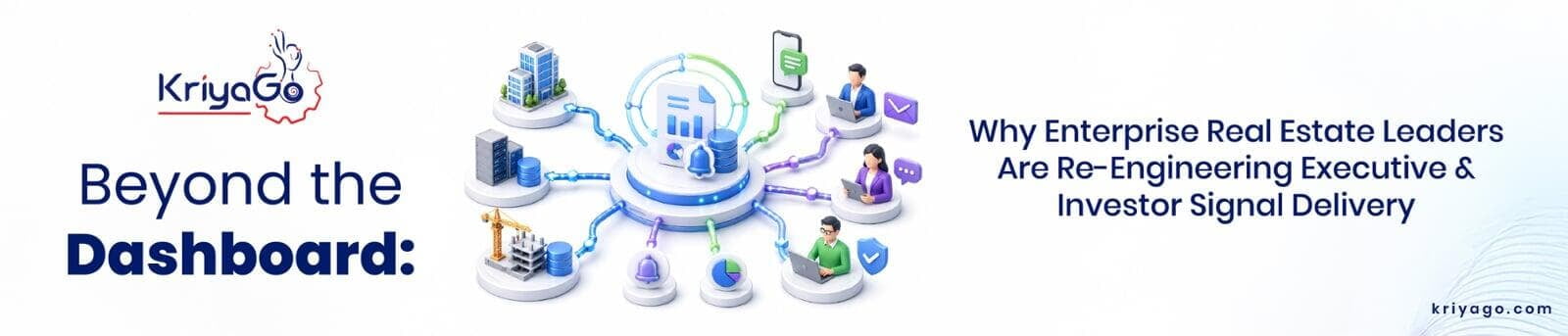
To overcome communication bottlenecks, real estate technology leaders are shifting from passive reporting repositories to active, multi-channel messaging and signal distribution architectures. An enterprise signal engine operates directly above core property management ERPs:
Event-Driven Triggers:
Rather than relying entirely on calendar-based manual runs, the signal engine monitors ERP transactional streams to trigger notifications when specific business rules are met.
Multi-Channel Orchestration:
Stakeholders receive communications through verified channels, whether formatted executive email summaries, instant messaging alerts, or direct secure portal links.
Delivery Assurance & Audit Logging:
Provides complete deliverability tracking, verifying when a report was dispatched, delivered, opened, or accessed for compliance.
ERP Coexistence without Direct Writes:
Interacts with underlying property management platforms strictly via approved web services and REST APIs to preserve core system security.
3. What Core Operational Signals Drive Maximum Value for Real Estate Stakeholders?
When evaluating automated messaging and distribution capabilities, real estate leaders focus on five high-impact operational domains:
4. How Should Real Estate Companies Govern AI Signal Implementations?
Real estate automation projects succeed when executed through a disciplined, phase-gated framework that validates scope and data readiness prior to full production rollout:
Phase 1 - Discovery, Data Validation & Architectural Alignment:
Evaluate data cleanliness across historical ERP modules, audit existing licensed software features, map required web-services patterns, and define rule baselines. Project scope, data readiness, and realistic timeline requirements are fully validated before committing build resources.
Phase 2 - Proof-of-Concept & Stream Builds:
Construct functional automation workflows in UAT using anonymized operational data, testing exception handling, proving baseline performance metrics, and refining integration flows per business stream.
Phase 3 - Enterprise Deployment & Production Rollout:
Harden API connections, execute role-based user enablement and training, deploy hypercare monitoring, and transition workflows smoothly into steady-state operations.
5. Technical & Structured Data Overview (Schema.org Integration)
To optimize extractability for search crawlers and AI answer engines, the following JSON-LD structured data schema can be embedded
directly into website page headers:
"@context": "https://schema.org",
"@type": "BlogPosting",
"mainEntityOfPage": {
"@type": "WebPage",
"@id": "https://www.kriyago.com/blogs/post/beyond-the-dashboard-real-estate-signal-delivery-kriyago"
},
"headline": "Beyond the Dashboard: How Enterprise Real Estate Leaders Are Re-Engineering Executive & Investor Signal Delivery",
"description": "An executive guide for real estate developers and asset managers on replacing manual report distribution with automated, event-driven signal engines.",
"publisher": {
"@type": "Organization",
"name": "KriyaGo",
"url": "https://www.kriyago.com"
},
"keywords": "Real Estate Reporting Automation, KriyaSignal, Property Management ERP Integration, Owner Report Distribution, Real Estate AI Messaging"
}
Elevating Real Estate Communications with KriyaSignal
Moving beyond static dashboards and manual report compilation requires an enterprise-grade approach to operational messaging.
Through KriyaSignal, KriyaGo provides real estate organizations with an automated communication and signal delivery engine designed to seamlessly connect core property management platforms such as Yardi Voyager, MRI Software, RealPage, and Procore with multi-channel stakeholder messaging. By automating owner report distribution, event-driven exception alerts, and executive risk notifications, KriyaSignal enables real estate leaders to eliminate communication bottlenecks, protect platform integrity, and deliver actionable insights directly to decision-makers.