
"Where did this number come from?" It's the question every audit partner asks and the one that can turn a routine engagement into a week-long investigation. In Singapore's ACRA 2024 Audit Regulatory Report, recurring failures in documentation and quality control continue to be persistent concerns. Across APAC, ASIC found that 58% of key audit areas reviewed required improvement, often due to insufficient audit evidence.
The common thread? Manual processes that can't keep pace with the complexity of modern real estate portfolios. The solution isn't more auditors, it's better data infrastructure.
The Audit Evidence Problem in Real Estate
Real estate audits are uniquely challenging. A single REIT might hold properties across Singapore, Australia, Japan, and emerging Southeast Asian markets each with different property management systems, local accounting standards, and data formats. When auditors need to trace a revenue figure back to its source, they're often navigating a maze of spreadsheets, manual extractions, and tribal knowledge.
Consider what happens during a typical quarterly closing. Property managers export data from Yardi or MRI. Finance teams manipulate it in Excel. Consolidation occurs in yet another system. By the time a number reaches the financial statements, it's been touched by multiple hands and transformed through undocumented processes. When auditors ask, "Show me how you got here," the answer often involves reconstructing a paper trail that was never designed to be audited.
What Data Lineage Actually Means for Auditors
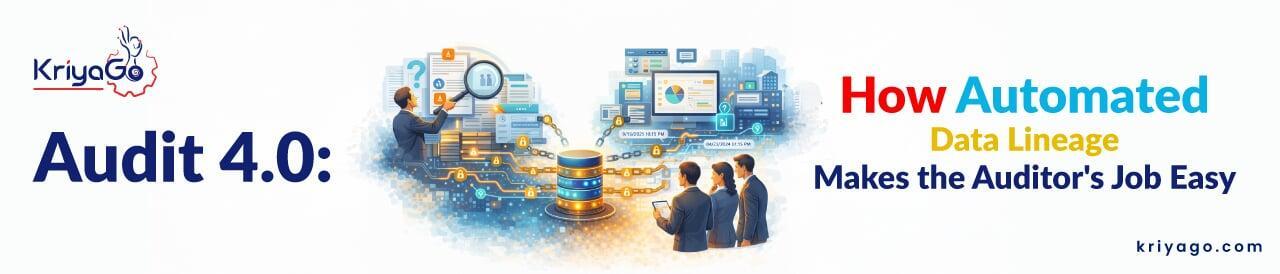
Data lineage is the complete documented history of how data flows from source to report, every transformation, every system handoff, every business rule applied. Unlike a traditional audit trail that records who changed data, lineage shows what happened to data and why. It's the difference between knowing someone edited a cell and understanding the entire journey from property management system to consolidated financials.
For audit partners, automated lineage transforms the verification process. Instead of sampling transactions and hoping they're representative, auditors can trace any figure forward from source to report, or backwards from report to source, with complete visibility into every transformation. The question "where did this number come from?" can be answered in minutes rather than days.
Verification as a Service: A New Paradigm
Here's a concept that's gaining traction among forward-thinking real estate operators: what if data verification wasn't something auditors did to you, but something your systems did for you continuously, automatically, and with complete documentation?
We call this "Verification as a Service." Rather than treating audit readiness as a periodic scramble, organizations embed verification into their integration infrastructure. Every data transformation is logged. Every business rule is documented. Every system handoff creates an immutable record. When auditors arrive, they're not reconstructing history; they're reviewing a verification layer that's been operating since day one.
The benefits cascade through the audit relationship. Audit partners gain confidence in client data before they sign off. Engagement timelines compress because evidence gathering happens automatically. Audit fees potentially decrease because less manual verification work is required. And most importantly, the risk of material misstatement declines because data integrity issues are detected in real time rather than during year-end procedures.
Why This Matters for Singapore and APAC
Asia Pacific's commercial real estate market is entering a stabilization phase, with transaction activity and deal sizes rising. Singapore remains a regional REIT hub, with Deloitte's Real Estate Sector practice serving some of the industry's largest trusts and property companies. But growth brings complexity, more properties, more jurisdictions, more systems generating data that needs to flow into auditable financial statements.
The regulatory environment is also tightening. Singapore's upcoming Building Control Amendment Bill introduces new energy reporting requirements. Cross-border portfolios face varying standards across IFRS-adopting jurisdictions. ESG disclosures demand traceable data from building management systems through to sustainability reports. Each new requirement expands audit scope and, without proper data infrastructure, increases audit risk.
Building Audit-Ready Infrastructure
At KriyaGo, we build integration infrastructure with audit requirements in mind from the start. Our Connect 360 platform doesn't just move data between Yardi, MRI, and financial systems; it creates the lineage documentation that auditors need. Every transformation is logged. Every business rule is versioned. Every data flow is traceable.
With over 120 proprietary integration assets purpose-built for real estate, we understand the audit requirements that come with REIT structures, cross-border portfolios, and multi-system environments. We help real estate organizations move from reactive audit preparation to continuous verification, making the auditor's job easier and reducing risk for everyone involved.
The best audit is one where every question has an instant answer. That's what automated data lineage delivers.
Ready to make your real estate portfolio audit-ready?
See how KriyaGo's automated data lineage simplifies audit verification for REITs and property portfolios across APAC. Request a demo to explore our Verification-as-a-Service approach.